
In 2026, tax strategies are no longer a seasonal exercise—it is a core component of sophisticated business strategy. For high-income entrepreneurs and affluent business owners, the tax code is not simply a set of rules to follow, but a framework to navigate strategically. With recent legislation solidifying key provisions and reducing uncertainty, the focus has shifted from reactive decision-making to intentional, forward-looking wealth architecture.
At this level, success is no longer defined solely by revenue growth. It is defined by how efficiently that income is structured, preserved, and transitioned into long-term wealth. The most effective entrepreneurs understand that their business is not just an income generator—it is a wealth engine. The role of tax strategy is to ensure that engine operates at maximum efficiency.
Below is a strategic overview of the most impactful tax considerations shaping 2026—and how they can be leveraged to protect and grow your capital.
For years, many business owners defaulted to an S-Corporation without revisiting whether that structure remained optimal as their income and long-term objectives evolved. In 2026, that approach is no longer sufficient. The decision between a C-Corporation and an S-Corporation must be made within the context of your broader financial strategy—particularly your exit horizon and capital deployment goals.
For entrepreneurs building toward a future liquidity event, the C-Corporation structure introduces a powerful opportunity through Qualified Small Business Stock (QSBS). When structured properly, QSBS can allow for the exclusion of up to $15 million in capital gains per shareholder upon the sale of a business.
For founders and early investors, this is not a marginal benefit—it is a transformational planning tool. When integrated early, it can redefine the after-tax outcome of an eventual exit.
For business owners focused on current income rather than exit, the S-Corporation remains highly effective. By structuring compensation between reasonable salary and profit distributions, owners can reduce exposure to the 15.3% self-employment tax on a portion of their income.
However, this is not a static decision. As income grows and objectives shift, the structure should be revisited proactively. What worked at $500,000 in revenue may not be optimal at $5 million.
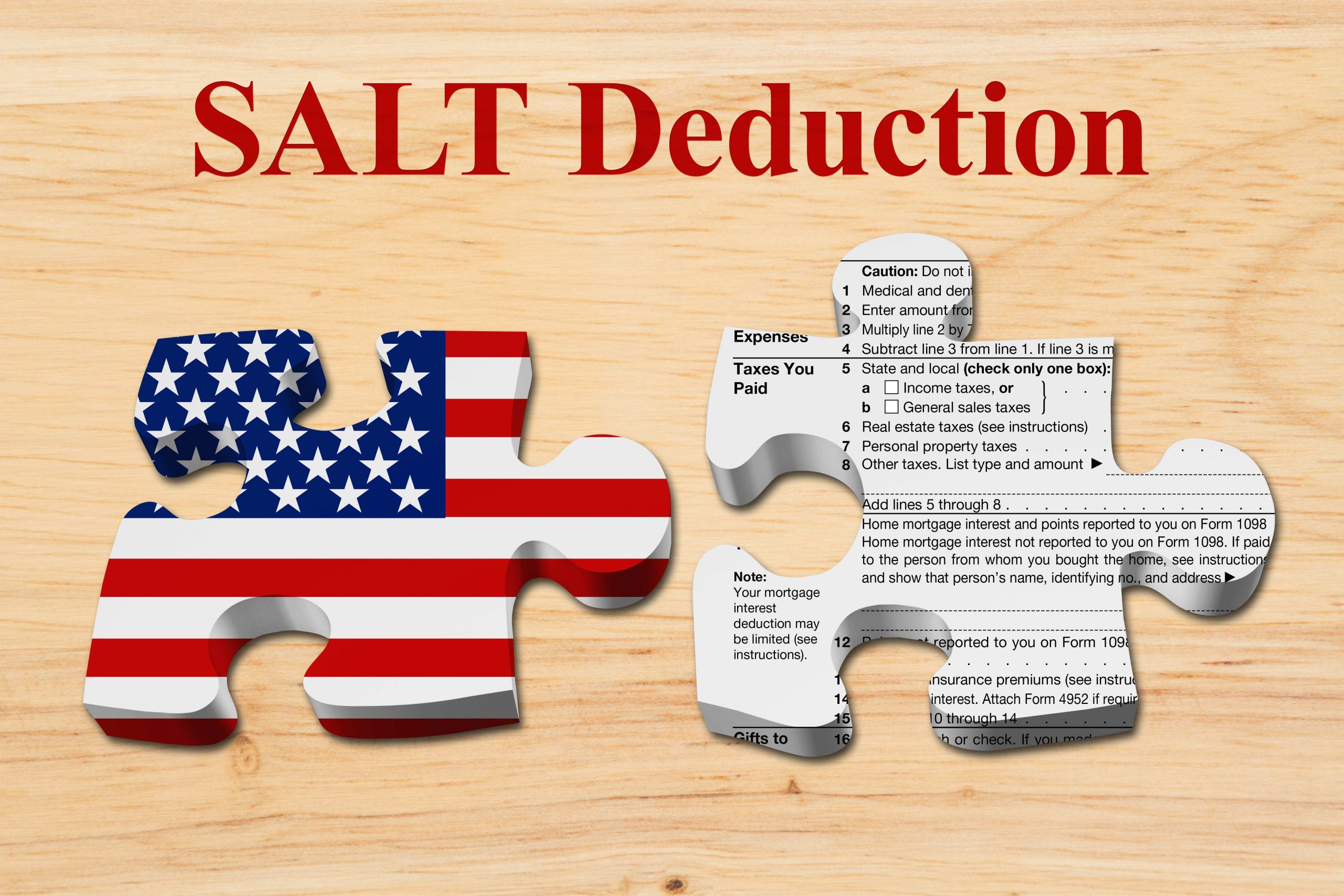
The State and Local Tax (SALT) deduction cap has been adjusted to $40,400, providing some relief compared to prior years. However, for high-income individuals in high-tax states, this cap still represents a significant limitation.
Without strategic planning, business owners may find themselves paying federal tax on income that has already been taxed at the state level—an inefficient and avoidable outcome.
Through properly structured Pass-Through Entity (PTE) elections, it is often possible to shift state tax payments from the individual level to the entity level. This effectively allows those taxes to become fully deductible at the federal level, bypassing the SALT cap.
This tax strategy is highly technical and varies by state. Missing a filing deadline or failing to structure the election correctly can eliminate the benefit entirely.
At this level, execution is as important as strategy. Precision matters.
High-income investors are frequently subject to the 3.8% Net Investment Income Tax (NIIT) on passive income such as dividends, interest, and capital gains. While often viewed as unavoidable, this surcharge can be mitigated with proper planning.
Rather than focusing solely on what investments you own, sophisticated planning considers where those assets are held. By positioning high-income-generating assets within tax-advantaged or tax-deferred accounts, it is possible to reduce or eliminate exposure to the NIIT.
This approach not only lowers current tax liability but enhances long-term compounding by reducing annual tax friction.
One of the most significant planning opportunities available to high-net-worth families in 2026 is the $15 million per individual estate tax exemption ($30 million for married couples).
While this threshold is substantial, it should not create complacency. For entrepreneurs, business value often grows rapidly—and without proactive planning, that future growth may fall outside the protection of today’s exemption levels.
Advanced planning techniques, such as Grantor Retained Annuity Trusts (GRATs), allow business owners to “freeze” the current value of their estate for tax purposes. Future appreciation can then pass to heirs with little to no additional estate tax exposure.
This is not simply estate planning—it is strategic wealth transfer. It allows families to preserve the upside of business growth across generations without unnecessary tax erosion.
Traditional tax planning often occurs at year-end. By then, many opportunities have already passed. In contrast, modern tax strategy operates continuously throughout the year.
Through direct indexing, portfolios can be analyzed at a granular level to identify underperforming positions—even within a broadly positive market. These positions can be sold to generate realized losses, which can then be used to offset:
This approach transforms market volatility into a strategic advantage, allowing investors to create tax efficiency even in fluctuating conditions.
Each of these tax strategies—entity structuring, SALT optimization, NIIT mitigation, estate planning, and tax harvesting—can provide meaningful benefits individually. However, the greatest impact occurs when they are coordinated within a unified strategy.
For example:
At higher income levels, these interactions become more complex—and more consequential.
This is where the distinction between tax preparation and tax strategy becomes clear.
At your level of success, the conversation is no longer about filing accurate returns. It is about engineering outcomes.
The difference between a reactive tax approach and proactive tax strategies is not incremental—it is exponential. Over time, the gap between the two can represent millions of dollars in retained wealth.
Your business should not only generate income. It should function as a high-efficiency engine for long-term wealth creation, supported by intentional structuring, disciplined planning, and continuous oversight.
Tax strategy in 2026 is no longer about minimizing liability in a single year. It is about building a system that aligns your business, investments, and long-term objectives into a cohesive, optimized framework.
Because ultimately, success is not defined by how much you earn —
but by how much you keep, grow, and pass on.